

A look at how thoughtful architecture by RUHL | JAHNES balances social hubs with private nooks in a coastal New England home.
— Insights
houses
Building on the Water’s Edge: Navigating the Challenges of Wetland Architecture

Contemporary Sustainable Architecture Near Essex Bay
Building on the water's edge presents a unique convergence of regulatory complexity, environmental sensitivity, and design opportunity. Designed by architecture firm RUHL | JAHNES, this 2,236-square-foot net-positive home on Essex Bay navigates Massachusetts wetlands regulations while achieving energy independence and seamless integration with its heavily wooded site. The Essex Bay House project demonstrates that stringent environmental requirements need not constrain design ambition. Instead, they can become catalysts for more thoughtful, site-responsive architecture.
Every decision, from foundation strategy to material selection, responds to the home's proximity to protected wetlands and its exposure to coastal weather patterns. The result is architecture that maximizes water views while minimizing environmental impact, proving that waterfront living and ecological responsibility can advance together rather than compete.
Navigating Massachusetts Wetlands Protection in Waterfront Architecture
The Massachusetts Wetlands Protection Act establishes comprehensive requirements for any construction near water bodies, requiring close collaboration with the Gloucester Conservation Commission from initial concept through final approval. These regulations influenced the home's footprint, positioning, and construction methodology, necessitating early engagement with environmental consultants and regulatory bodies to establish feasible parameters before design development began.
Rather than viewing wetland regulations as obstacles, the design team treated them as frameworks that would ultimately improve the project. Compliance requirements directed attention toward site features that might otherwise have been overlooked, while buffer zone restrictions naturally limited site disturbance. This regulatory structure created boundaries within which more creative solutions emerged, demonstrating how environmental protection and design innovation can reinforce rather than undermine one another.
Protecting the Surrounding Ecosystem
A budget-conscious design strategy encouraged simple overall forms that could be optimized for views and site features without unnecessary complexity. The design angles the two main sections of the home toward Essex Bay while wrapping around an existing rock formation, a strategy that reduced construction costs while minimizing site disturbance. This approach prioritized working within the landscape rather than imposing predetermined forms upon it.
Thoughtful site planning limited clearing to only what construction required, preserving existing vegetation that provides natural erosion control and wildlife habitat. The home's positioning maintains established drainage patterns while protecting water quality in nearby wetlands. These environmental considerations shaped architectural decisions from the outset rather than being addressed as afterthoughts, integrating ecological stewardship into the design process.
Working with Nature in Modern Sustainable Architecture: From Obstacle to Centerpiece
Removing an existing asphalt driveway revealed dramatic house-sized rock outcroppings that would have been costly to remove through conventional excavation. The decision to integrate rather than eliminate these formations creates distinctive architectural character without adding to the construction budget. As architect William Ruhl explains, "Rather than treating the existing rock outcropping as a hindrance needing to be dynamited, we decided from day one to design the house to feature it, and it is beautifully integrated into the landscape design."
The house wraps around the rock formation, with the angle of its two wings creating the impression that the structure grew from the site rather than imposed on it. This integration transforms what might have been an expensive obstacle into a compelling focal point that connects the home’s interior spaces to the site's geological character. The approach demonstrates how embracing existing conditions can simultaneously reduce costs and enhance design quality.
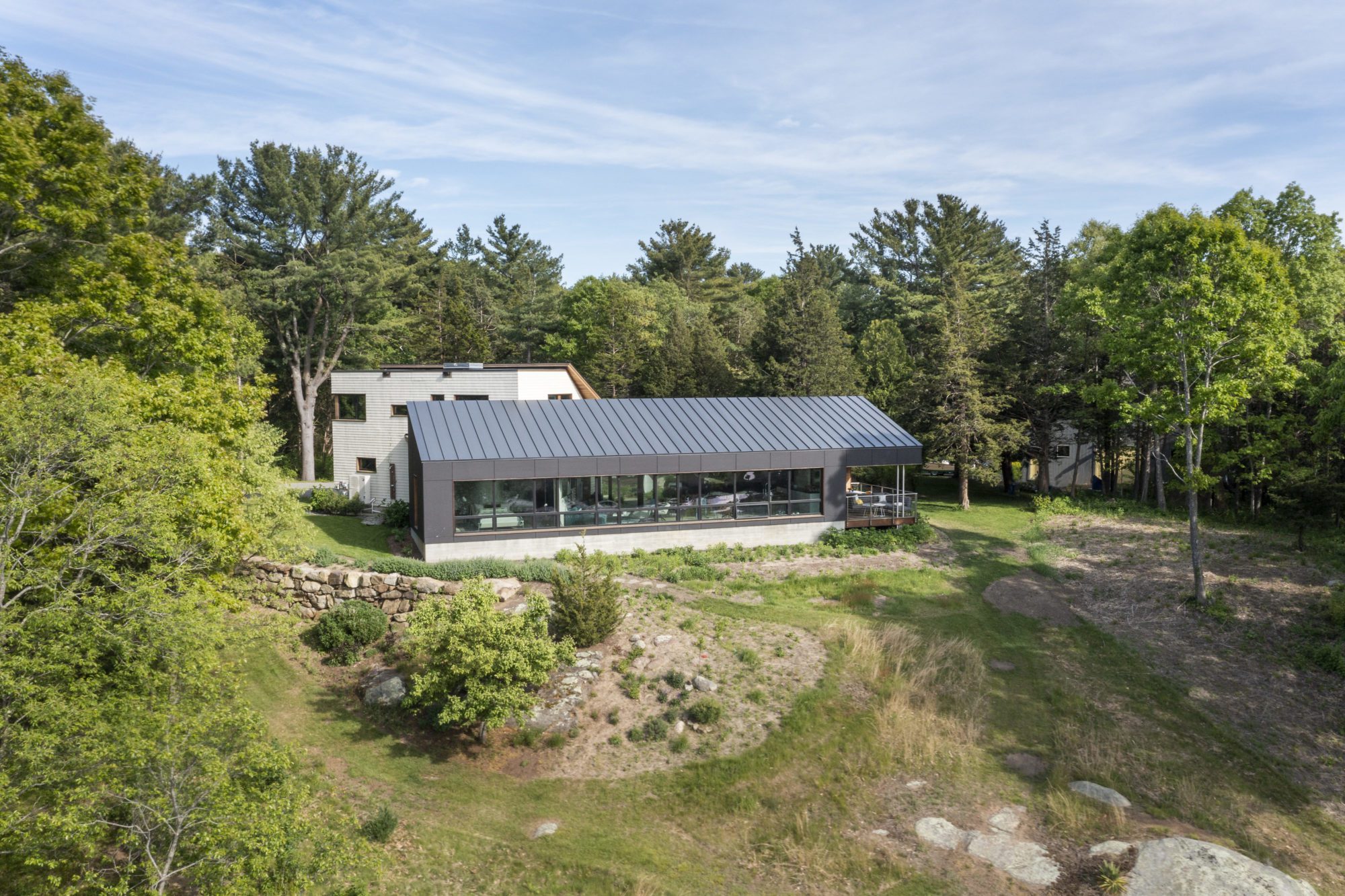
Foundation Integration in North Shore Massachusetts
New foundations were pinned directly to existing rock outcroppings, providing exceptional stability while eliminating the need for extensive excavation. The main floor utilizes slab-on-grade construction with engineered crushed stone and an insulated base, a system well-suited to the site's rocky terrain. Working with natural topography delivered both structural advantages and cost savings, while the exposed rock formations create textural variety that enriches the architectural experience.
Wetlands Architecture Engineering for Water Management and Erosion Control
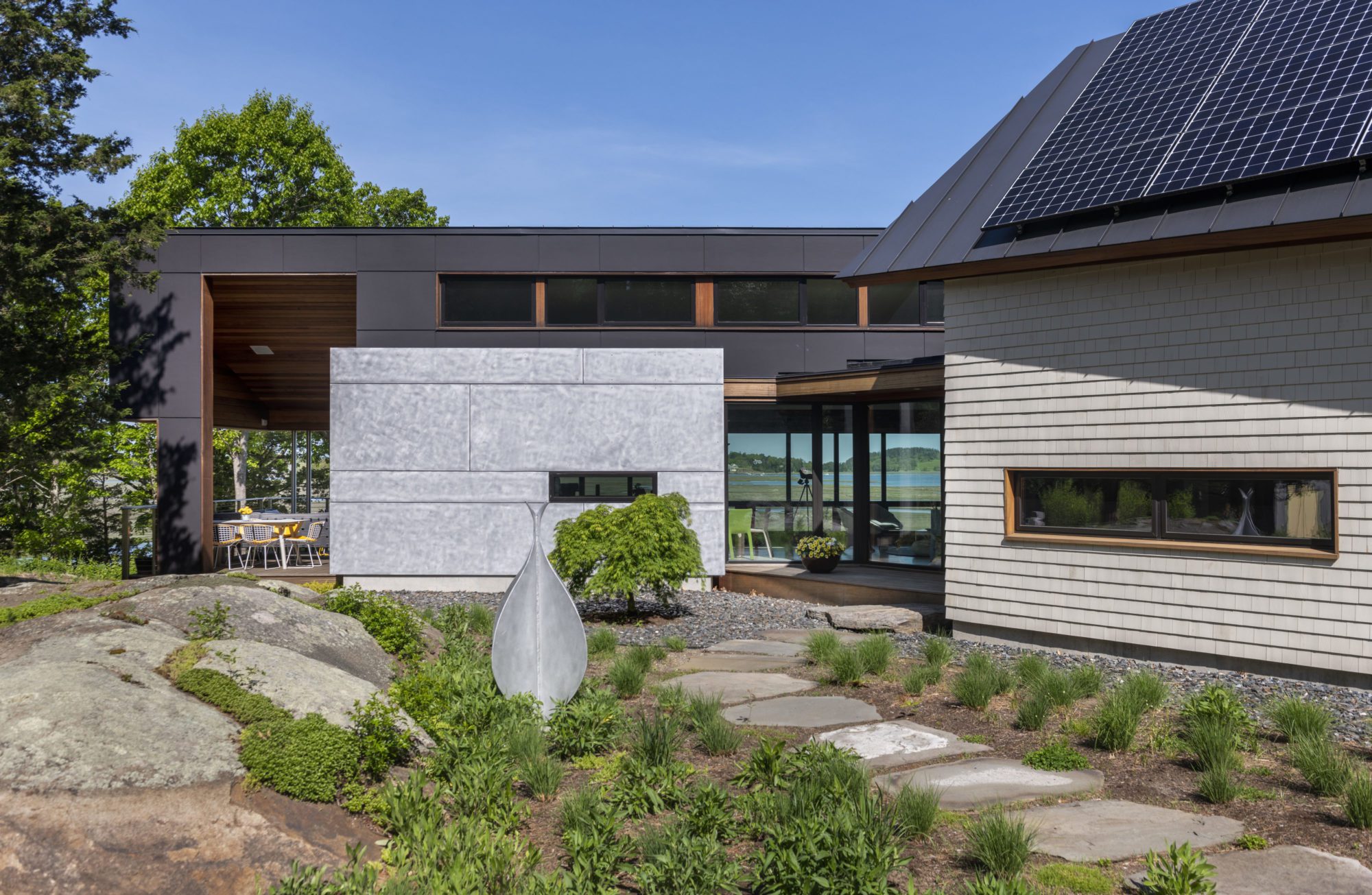
Landscape Design for Water Runoff
Strategic placement of native plant species absorbs and manages water runoff naturally, working with the site's existing drainage patterns. River rock areas provide effective drainage while preventing erosion, their placement informed by observed water movement during storm events. Collaboration with landscape architect Lolly Gibson addressed both practical water management and visual privacy concerns, creating screening that enhances rather than conflicts with environmental objectives.
The landscape design channels water away from foundations while allowing natural infiltration that maintains wetland hydrology. Native species require minimal irrigation once established, reducing water consumption while providing habitat value. These integrated strategies demonstrate how landscape architecture can serve multiple functions simultaneously when environmental considerations guide design decisions from the beginning.
Flood Risk Mitigation
The home sits well above local flood zones, a strategic siting decision that provides long-term resilience against rising water levels and storm surge. This elevation requirement initially appeared to conflict with maximizing water views, but careful positioning achieved both objectives. Proper elevation planning delivers safety and peace of mind without compromising the visual connection to Essex Bay that motivated the site selection.
Waterfront Architecture Material Selection for Coastal Durability
Low-Maintenance Exterior Design
Material selection prioritized durability, minimal maintenance requirements, and affordability within harsh coastal conditions. The black exterior helps the structure visually recede when viewed from Essex Bay, allowing the home to maintain presence for occupants while remaining unobtrusive. Lowered roof eaves integrate the building with its rough-hewn setting while providing practical protection against wind-driven rain and snow.
These material choices address both aesthetic and practical concerns inherent to wet, salt-laden environments. Finishes resist degradation from constant moisture exposure while requiring minimal ongoing intervention. This approach balances initial costs against long-term maintenance expenses, recognizing that waterfront properties face accelerated weathering that makes material longevity particularly valuable.
Net-Positive Design: Energy and Sustainability
Building-Integrated Solar and Advanced Insulation
The home achieves net-positive energy status, generating sufficient power to operate the residence and charge the owners' electric vehicles while contributing surplus energy to the grid. Building-integrated solar panels provide renewable energy without compromising architectural composition, their placement coordinated with roof forms from initial design stages. Enhanced insulation technology reduces heating and cooling loads, delivering both immediate comfort and long-term cost savings.
The design of the Essex Bay House capitalizes on passive solar heat gain while managing coastal exposure that could lead to overheating during summer months. Strategic window placement and thermal mass considerations optimize energy performance across seasonal variations. These systems work together to create a home where sustainability serves daily comfort rather than requiring compromise.
The Economic Case for Sustainability
By working within wetland regulations and embracing natural features, the home demonstrates how sustainable architecture can reduce costs while enhancing environmental outcomes. Choices like advanced insulation and solar panels provide immediate operational savings that compound over time, making high-performance design economically advantageous even on constrained budgets. Strategic decisions about foundation systems, material selections, and energy systems achieved exceptional results without the premium costs often associated with waterfront construction.
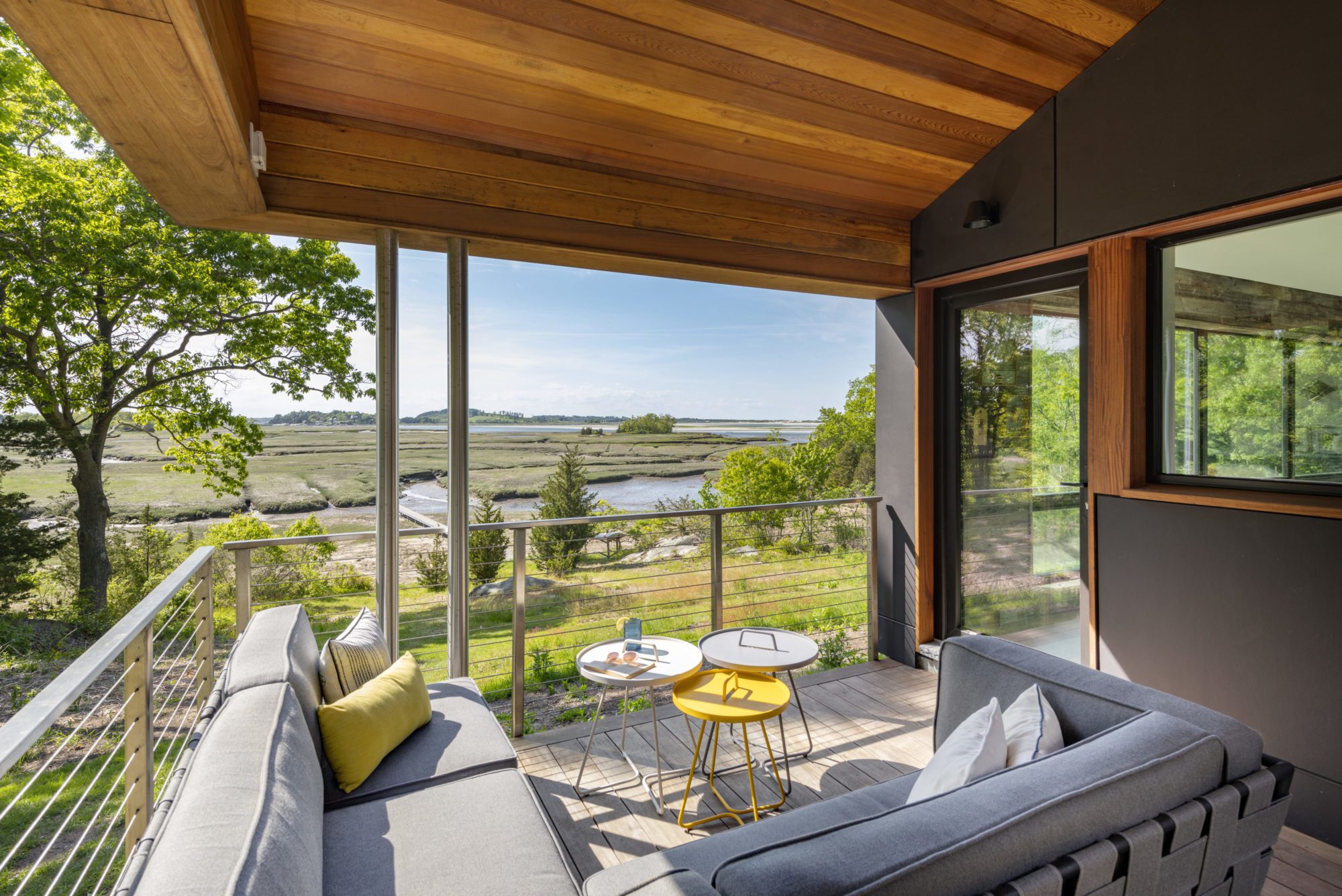
Architectural Composition and Spatial Experience
The rectangular main structure features floor-to-ceiling windows that maximize views of Essex Bay while establishing a strong visual connection between interior spaces and the surrounding landscape. Primary living and sleeping areas, kitchen, bar, and a covered porch with sunset views all orient toward the water, creating spaces that feel immersed in their coastal setting.
Simple, angled forms compound the sensation of being surrounded by nature while maintaining privacy from neighboring properties. Site constraints such as wetland buffers, existing vegetation, and rock outcroppings collectively shaped both the home's footprint and its relationship to the waterfront views. The architectural language remains deliberately understated, allowing landscape and light to dominate spatial experience.
The Transitional Entry
A triangular entry space connects the main structure to a more intimate second section, creating a unique architectural transition between arrival and primary living areas. Raw shiplap walls and ceilings provide textural warmth while distinguishing this threshold zone from the window-lined spaces beyond. This entry sequence moderates the experience of dramatic water views, creating anticipation rather than revealing everything immediately upon entering.
Visual Integration: Disappearing into the Landscape
A Treehouse in the Trees
Positioning the home high within a heavily wooded lot creates a treehouse-like experience where the structure feels nested within its surroundings. Visual privacy emerges from careful landscape architecture and thoughtful screening rather than from walls or fencing, maintaining the sense of openness that makes waterfront living appealing while providing necessary seclusion.
The black exterior helps the building recede when viewed from the water, respecting the natural landscape that drew the owners to the site initially. This approach balances connection to Essex Bay views with privacy and environmental integration, demonstrating that waterfront homes need not dominate their settings to provide compelling living environments.

Lessons in Waterfront Architecture
Turning Constraints into Opportunities
Stringent wetland regulations prompted more thoughtful, site-responsive design than might have emerged without such requirements. The Essex Bay House demonstrates how constraints can become design advantages:
- Wetland setback requirements positioned the building to optimize solar orientation, improving energy performance while protecting sensitive ecosystems.
- Buffer zone restrictions naturally limited site disturbance, reducing excavation costs and preserving existing vegetation that provides erosion control.
- Conservation commission oversight encouraged early collaboration that prevented costly redesigns and identified opportunities.
- Discovered rock outcroppings eliminated expensive excavation work while becoming distinctive architectural features that anchor the home in its geological context.
The key insight: embracing natural features and regulatory requirements enhances both design quality and financial outcomes. Constraints focus attention on what matters most—site characteristics, environmental performance, spatial experience—while eliminating unnecessary elaboration. This project demonstrates that limitations can clarify design intentions rather than frustrating them, producing architecture more responsive to place than unconstrained approaches might achieve.
A Model for Responsible Coastal Development
The Essex Bay House designed by RUHL | JAHNES establishes that waterfront living and environmental responsibility can advance together rather than compete for priority. From wetland compliance through net-positive energy performance, the project takes a comprehensive approach to coastal architecture that addresses regulatory requirements, ecological impacts, energy consumption, and long-term resilience as integrated concerns rather than separate considerations.
This holistic strategy provides a precedent for future waterfront development in sensitive coastal areas. When building on the water’s edge, success depends on treating environmental constraints as design opportunities from the project's inception, allowing site characteristics and ecological considerations to inform rather than follow architectural decisions. With careful execution, responsible coastal development produces homes that enhance their settings while providing compelling living environments for occupants.