

A look at how thoughtful architecture by RUHL | JAHNES balances social hubs with private nooks in a coastal New England home.
— Insights
houses
Restoration vs. Renovation: Mid-Century Modern to Contemporary Beach Home
The Initial Assessment: Why Restore Rather Than Rebuild?
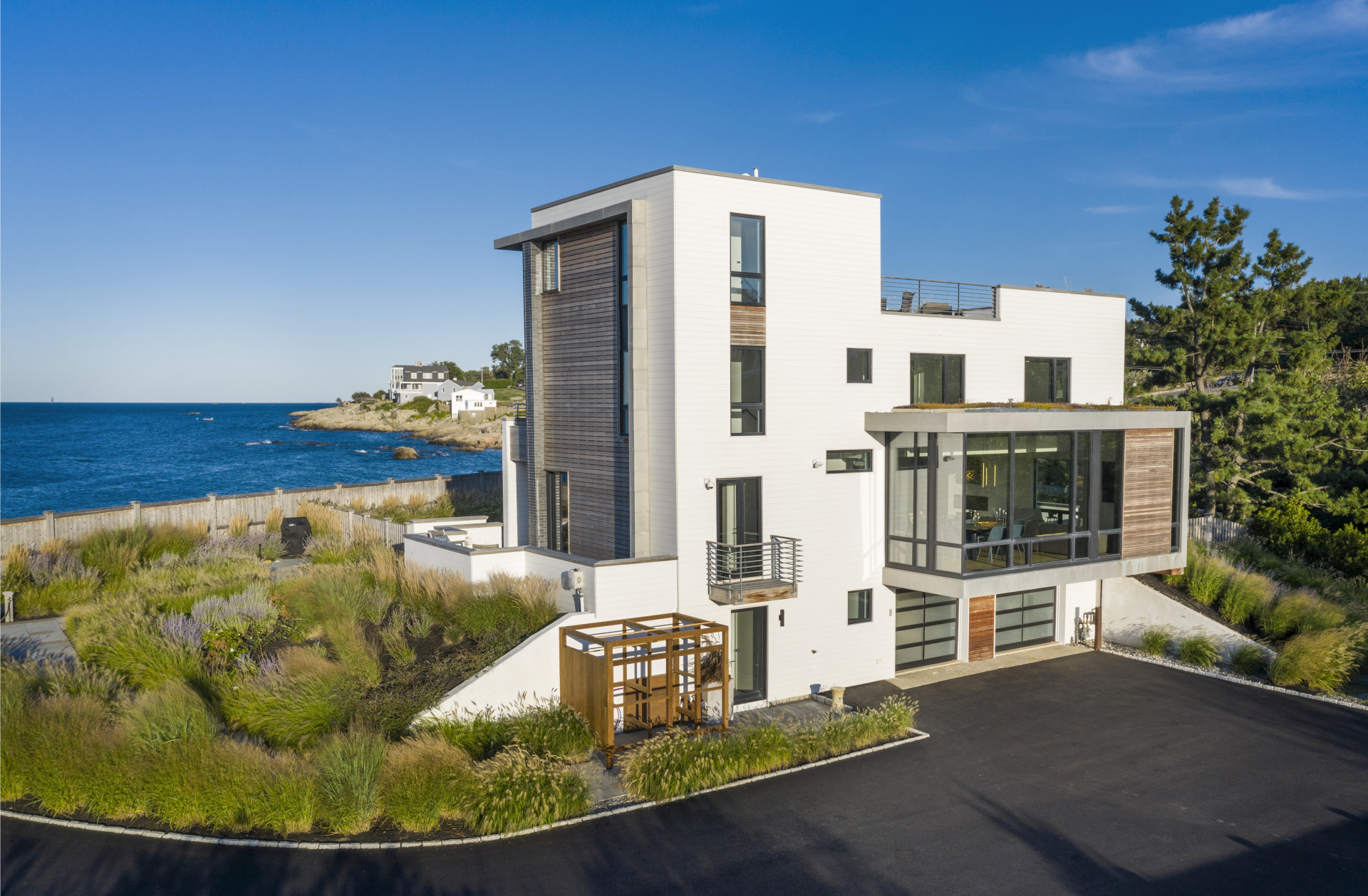
When the homeowners of the Black Rock Beach House first approached RUHL | JAHNES about their mid-century beach house, their conviction was clear: they wanted to work with the existing structure. The building appeared sound, its layout suited their needs, and the location between the ocean and a tidal pond meant Conservation Commission requirements would favor renovation within the existing footprint. Demolition and rebuilding seemed wasteful when the framework could be preserved, and the assumption was that restoration would prove more cost-effective than new construction.
That premise would be tested rigorously: what began as a targeted restoration evolved into something far more comprehensive. There’s a central tension in coastal renovation work: the difference between what appears salvageable and what is functionally salvageable. The decision to restore rather than rebuild was sound in principle, but the reality beneath the surface would demand a more nuanced understanding of what "restoration" actually means when applied to a mid-century structure exposed to decades of salt air and moisture.
Investigative Phase: Uncovering What Lies Beneath a Mid-Century Modern Beach House
Initial Structural Exploration
The structural engineer directed the contractor to cut exploratory holes throughout the house, a necessary step to verify what the initial assessment could only suggest. Where visible structure appeared adequate, solutions seemed straightforward. The partnership with RSE Associates, experienced structural engineers familiar with coastal renovation challenges, proved essential from the outset. Their conservative approach to investigation would prove prescient: in coastal renovation, the true extent of structural issues remains unknown until both interior and exterior finishes are completely removed.
The Hidden Damage Discovery
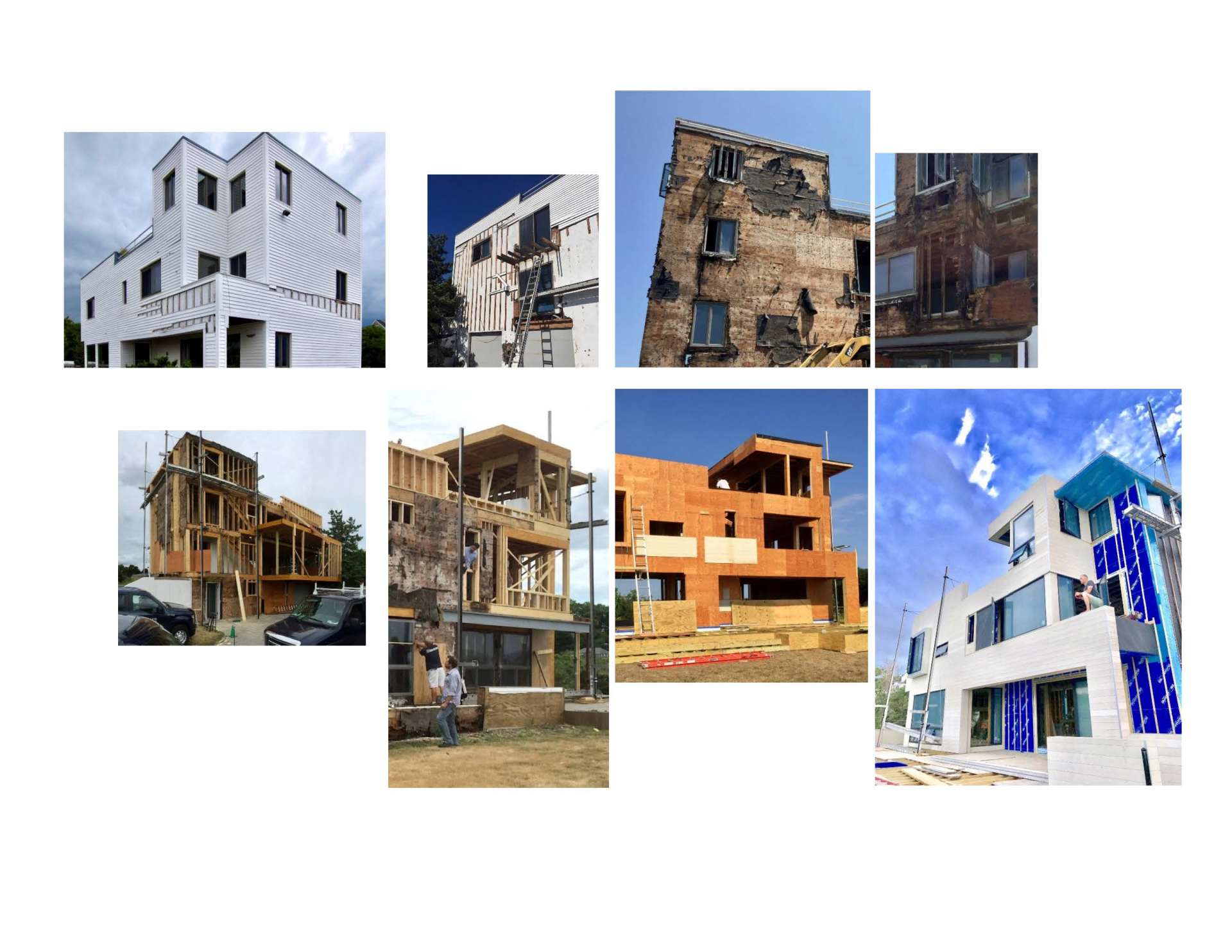
Demolition revealed what initial investigations could not. Beneath the surface finishes lay extensive rotted sheathing and deteriorated wall framing, damage that had been hidden from view. A well-intentioned previous owner had installed vinyl siding, which trapped moisture against the original exterior finishes and accelerated deterioration in the coastal environment. This discovery serves as a cautionary tale about building envelope interventions in seaside locations where cosmetic updates can mask and compound structural problems rather than solve them. A complete and accurate condition assessment was impossible until finishes were fully removed.
Mid-Century Modern Realities: Common Challenges in Coastal Renovations
Building Envelope Upgrades
Mid-century modern homes are notorious for building envelope deficiencies: leaky single-pane windows inadequate for coastal conditions, thin and under-insulated walls that fail modern energy standards, flat roofs requiring complete rebuilding to current requirements. In this project, every original window was replaced, every exterior finish redone. The under-insulated flat roof was rebuilt entirely. What had appeared as selective restoration became comprehensive renewal, driven by both the discovered damage and the gap between mid-century construction standards and contemporary requirements for oceanfront properties.
Code Compliance and Structural Upgrades
Code compliance added layers of complexity beyond the visible damage. Mid-century modern construction is typically under-structured compared to current building codes, and oceanfront locations impose additional requirements beyond standard residential specifications. The design and construction team had assumed from the outset that complete removal of interior and exterior finishes would be necessary to meet current codes. That assumption proved correct as every system and structural element required rebuilding to modern standards.
What Could Be Preserved: Working with Constraints in Contemporary Beach Home Renovation
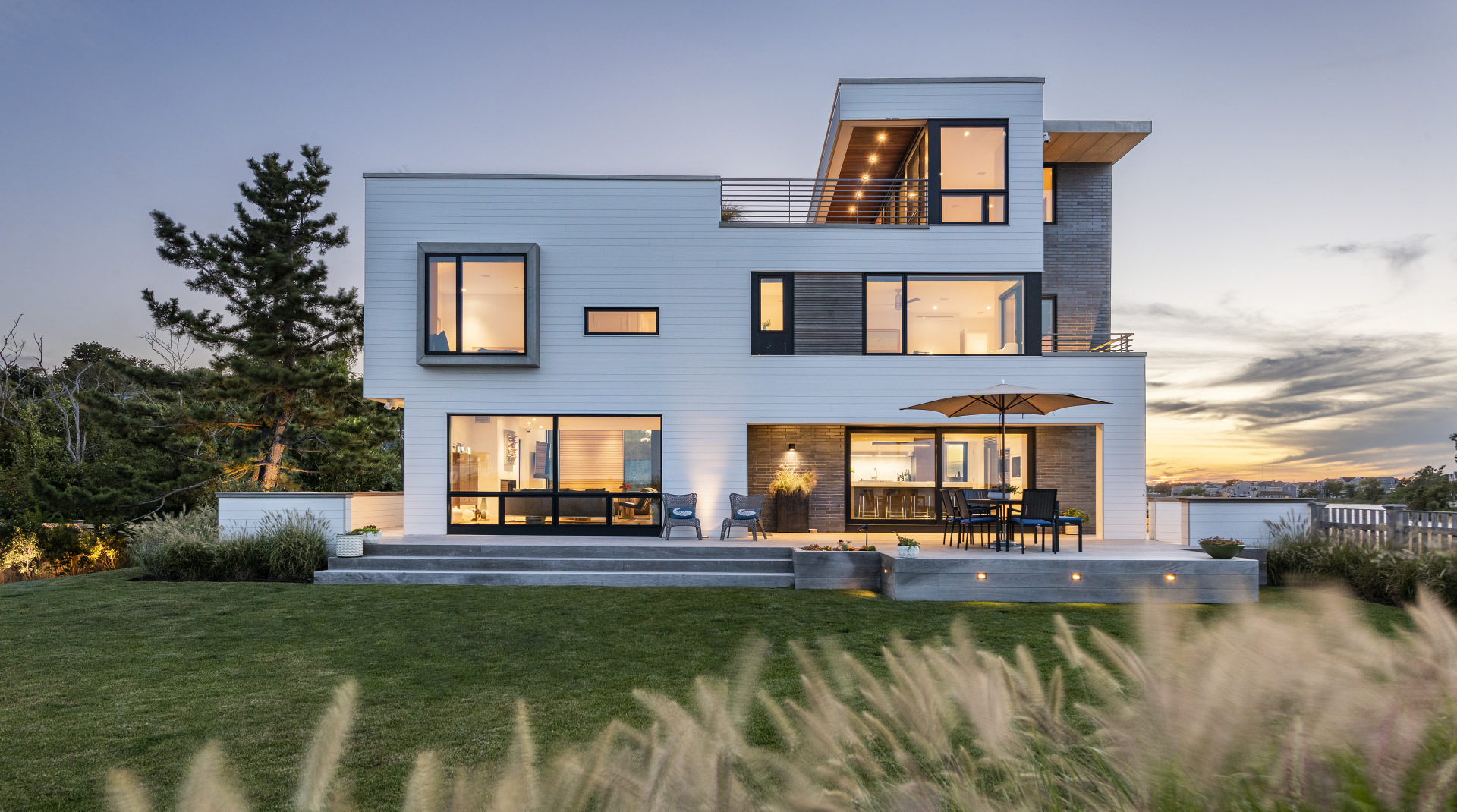
Despite the comprehensive scope of work, select elements remained fixed. The existing flat roof design was maintained to preserve the large roof deck and top floor living arrangement. The general structural footprint stayed intact, both to satisfy Conservation Commission limitations and honor the clients' commitment to working with the existing structure. No original interior or exterior details remained worth preserving as previous owners had already altered everything of architectural merit. This absence of heritage details, while unfortunate from a preservation standpoint, offered freedom to completely modernize without the ethical complications of destroying original craftsmanship.
Modernizing Systems: Total Infrastructure Replacement
Complete Systems Overhaul
The silver lining of such extensive damage was access: removal of all interior and exterior finishes provided relatively easy pathways for complete mechanical, electrical, and plumbing systems replacement. Total infrastructure renewal was simplified by the comprehensive demolition approach. Where historic details might have constrained modern systems, their absence allowed for optimal placement of updated infrastructure. The project became less about restoration in the traditional sense and more about reinvention within an existing spatial framework. Comprehensive renovation maintained the mid-century structure's essential geometry while replacing virtually everything else.
Weatherproofing for Coastal Conditions
Ocean proximity demanded a comprehensive approach to weatherproofing and moisture management that went beyond standard residential construction. The building envelope was rebuilt to exceed current code requirements for coastal exposure, recognizing that minimum standards would prove inadequate against sustained assault from salt air and wind-driven rain. Windows, insulation, and exterior finishes were selected specifically for the harsh marine environment, with material choices prioritizing durability and weather resistance.
The beachfront location clarified decision-making in ways that inland renovations might not: everything needed complete renovation, not selective restoration. Half-measures would fail quickly under coastal conditions, and the discovered extent of moisture damage from the previous vinyl siding installation underscored this reality. The weatherproofing strategy became comprehensive by necessity, transforming the project from restoration with targeted interventions into complete envelope replacement designed to withstand the decades of exposure to salt, moisture, and temperature fluctuations characteristic of oceanfront properties.
Contemporary Living in a Mid-Century Framework
Opening Up Isolated Spaces
Mid-century homes typically feature isolated kitchens, a spatial arrangement incompatible with contemporary family life and entertaining. The clients wanted a kitchen integral to the main living and dining space, supporting their frequent entertaining and desire for connected living. This philosophical alignment between the mid-century modern structure and contemporary openness simplified decision-making. The kitchen was completely opened, transforming it from a service zone into the social center of the home. The change supported the clients' vision while respecting the structure's inherent modernism.
Expanding for Modern Life
Additional spatial interventions enhanced modern living patterns. A massive bay window addition off the existing living space accommodates entertaining, acting as a dance floor during lively gatherings. During the pandemic, this large living space proved adaptable, serving as both home gym and office. All existing windows were expanded; ground floor openings now provide generous access to expansive outdoor terraces. The enhanced indoor-outdoor connection is fundamental to contemporary coastal living, and the mid-century structure's flat roofs, open plans, and window walls made this transformation feel natural rather than forced. The clients wanted a thoroughly modern house, and the mid-century framework provided an ideal foundation.
The Mid-Century Modern Home Advantage
Natural alignment between mid-century aesthetic principles and contemporary design goals simplified decision-making throughout the project; there was no tension between honoring historic character and meeting current lifestyle requirements. Flat roofs, open floor plans, and window walls characteristic of mid-century design supported the clients' contemporary coastal living vision without requiring philosophical compromise or awkward reconciliation between competing architectural languages.
The structure's inherent modernism eliminated the preservation-versus-functionality tension that often challenges historic renovation. Unlike Victorian or Colonial homes where updating can feel like working against original design intent, this mid-century framework welcomed contemporary interventions. The clients weren't asking the architecture to be something it wasn't; they were amplifying qualities already present in the structure. This alignment meant that even as virtually every material and system was replaced, the project maintained conceptual integrity; comprehensive renovation that honored the building's essential character precisely by making it more thoroughly what it had always aspired to be.
Decision Framework: Restoration vs. Renovation Criteria
The clients maintained their conviction to work within the existing structure from the first design meeting through completion, even as discoveries expanded the project scope beyond initial expectations. Site constraints such as Conservation Commission requirements, proximity to both ocean and tidal pond, and environmental considerations about avoiding demolition waste supported this approach. The reveal of the hidden damage tested this commitment, transforming the scope from selective restoration to comprehensive renovation, but the underlying reasoning remained sound.
Hard-Earned Lessons for Contemporary Beach Home Renovation Projects
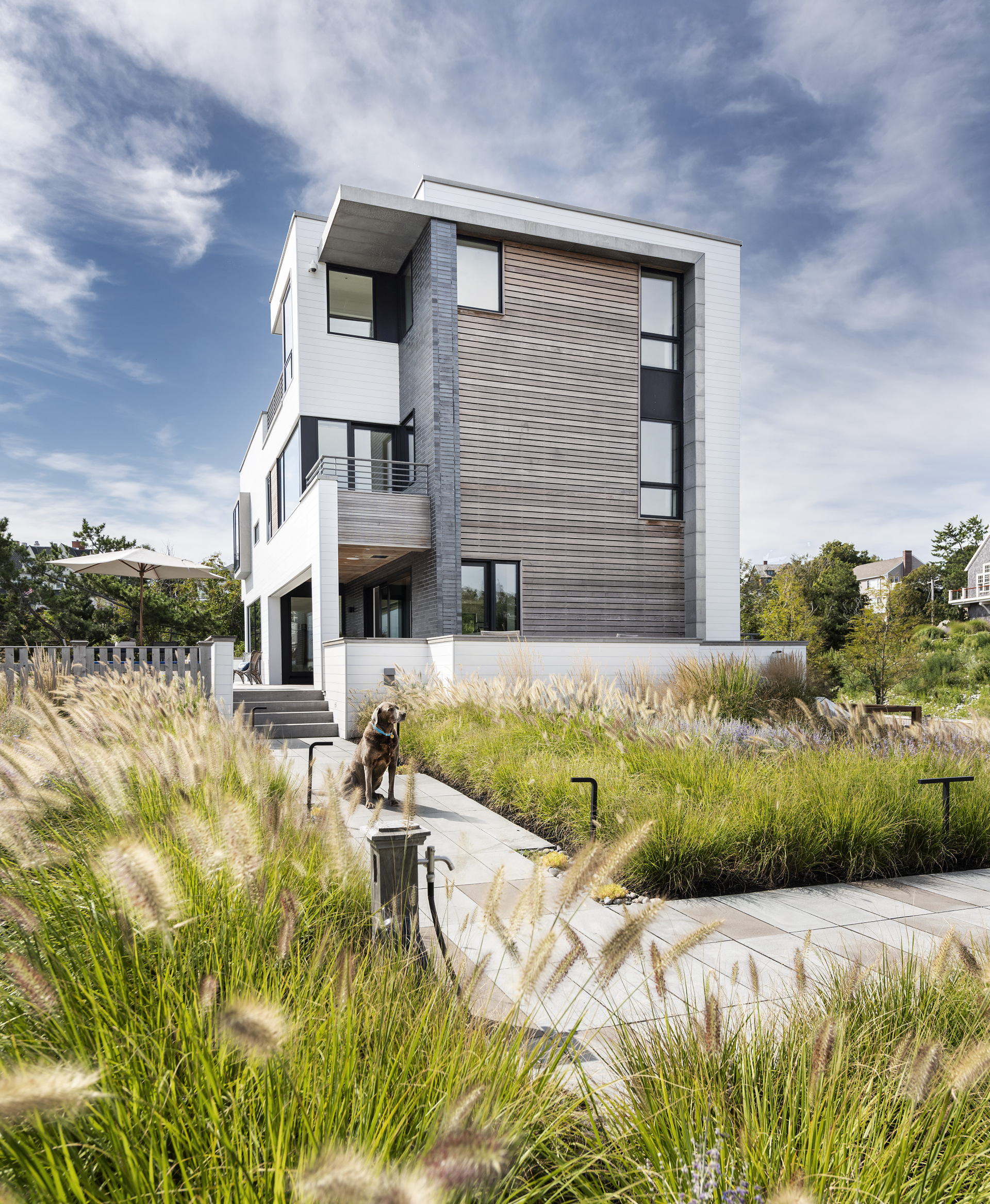
As seen in the renovation of the Black Rock Beach House by architecture firm RUHL | JAHNES, commitment to a chosen strategy becomes essential when discoveries inevitably expand scope beyond initial assessment. Cost savings assumptions about renovation versus new construction may not materialize when comprehensive work proves necessary, and previous owner "improvements" can mask serious underlying problems, particularly in coastal environments. Navigating these challenges requires commitment and expertise, but when a mid-century aesthetic aligns with contemporary goals, comprehensive renovation can achieve modern performance within a historic framework, even when nearly everything must be replaced to get there.