

A look at how thoughtful architecture by RUHL | JAHNES balances social hubs with private nooks in a coastal New England home.
— Insights
houses
A “Human-Scaled” Home: The Warm Modern Approach to Residential Architecture

Inviting Warmth in Modern Design
Modern architecture carries persistent associations with stark white spaces and clinical aesthetics, but this represents only one very narrow interpretation of modernism. The conversation around contemporary design has been dominated by images of austere interiors where warmth seems antithetical to sophistication. Designed by Boston-based architecture firm RUHL | JAHNES, the Black Rock Beach House offers a different proposition: that contemporary design can embrace comfort, natural materials, and human-centered proportions without abandoning the clarity and openness central to the tenets of modern architecture.
“Warm modern” describes an approach that balances clean lines with varied textures and thoughtful spatial planning. The main principles of modernism still apply: honest expression of materials, functional planning, and open connection to landscape. The challenge of warm modern design lies in maintaining the discipline of contemporary design while creating homes that genuinely welcome their inhabitants. The Black Rock Beach House project demonstrates strategies for achieving that balance, from material selection to spatial proportion to the careful calibration of light.
The Philosophy of Design for Human-Scale
Design Influences That Prioritize Comfort
Architect Will Ruhl draws on specific architectural traditions that inform his approach to warm modern design: Japanese architecture spanning from ancient temple construction to contemporary work by figures like Tadao Ando, the geometric explorations of the De Stijl movement, and Frank Lloyd Wright's Usonian Houses with their integration of structure and landscape. These varied influences share common threads of balanced asymmetry, flowing space, spatial multi-functionality, and the Japanese concept of wabi-sabi, which finds beauty in intentional imperfection and the weathering of natural materials.
Adapting Modern Design to Existing Structures
Human scale emerges from responding to each site's inherent limitations and opportunities rather than following strict dimensional formulas. This project worked within existing structural parameters rather than starting from scratch, which meant strategic interventions where they would matter most: varying ceiling heights between main living spaces and bedrooms, creating dramatic volume in the bay window addition. Structural constraints helped focus design decisions rather than limiting creativity, a perspective shift that transforms renovation challenges into opportunities for thoughtful problem-solving.
Material Warmth in Modern Residential Design
The Role of Wood in Contemporary Interiors
Rift-sawn white oak serves as a favored material for creating warmth in modern spaces, its subtle grain pattern providing texture without visual competition with other elements. Throughout this home, wood finishes vary deliberately; lighter oak floors contrast with deeper wood kitchen cabinets. This material variation creates appreciation for each finish rather than pursuing monochromatic matching, which can flatten spatial experience. The varied tones of the wood used ground these spaces in the tactile and organic, distinguishing the warm modern aesthetic from the cooler-toned monochrome interpretation many people associate with contemporary design.
Color and Texture Strategies
Paint selection matters more than many realize. Benjamin Moore's "Chantilly Lace" was chosen as a warm white that responds to changing coastal light throughout the day, avoiding the sterile quality of pure white. Alternative wall treatments provide additional texture: unpainted skim-coated plaster and naturally pigmented plasters like Devilime bring subtle variation to wall surfaces. These layers of material consideration—wood, plaster, paint—work together with art and furniture to prevent the stark minimalism that gives modernism its cold reputation.
Strategic Use of Light and Volume
Window Design for Warmth and Connection
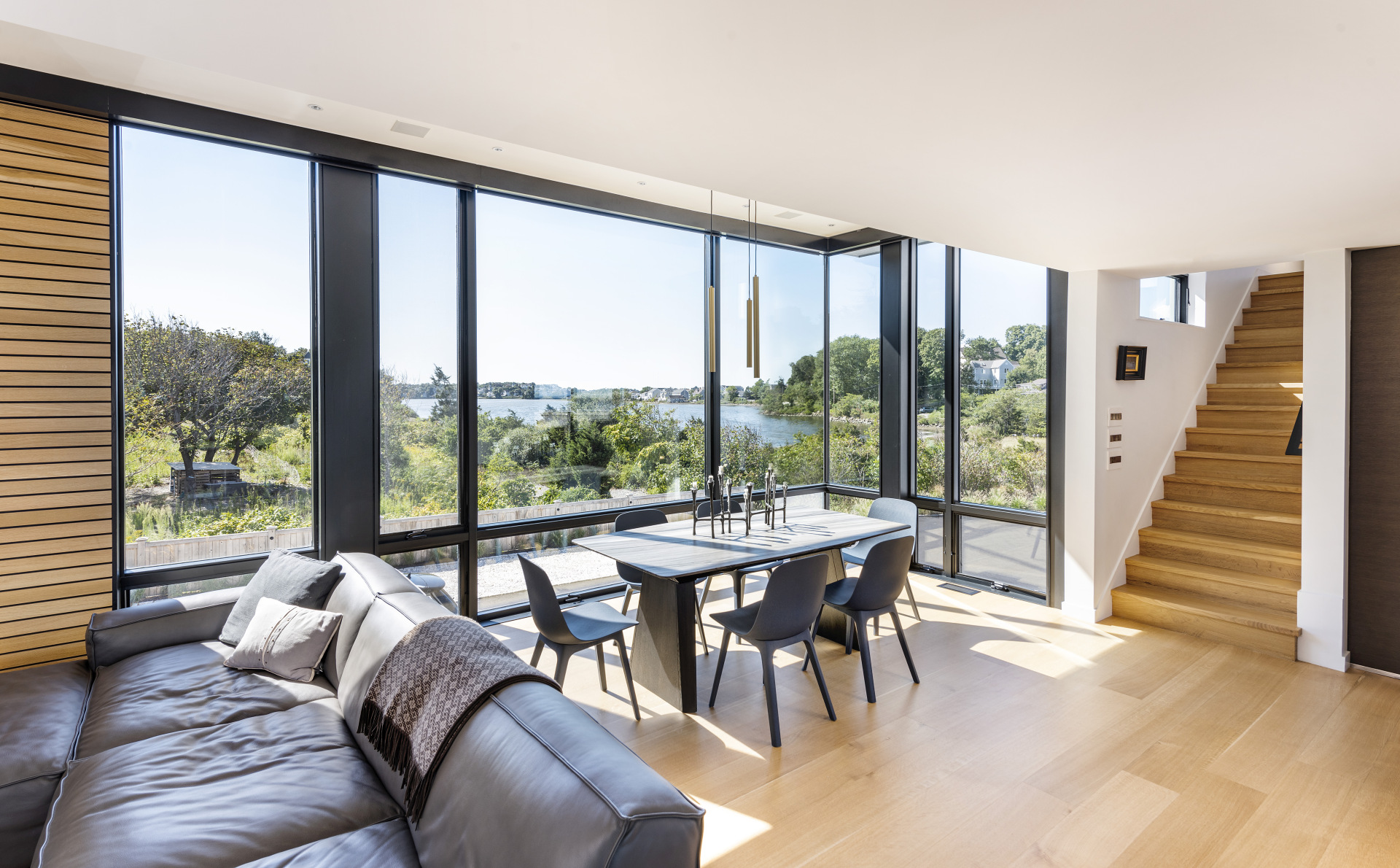
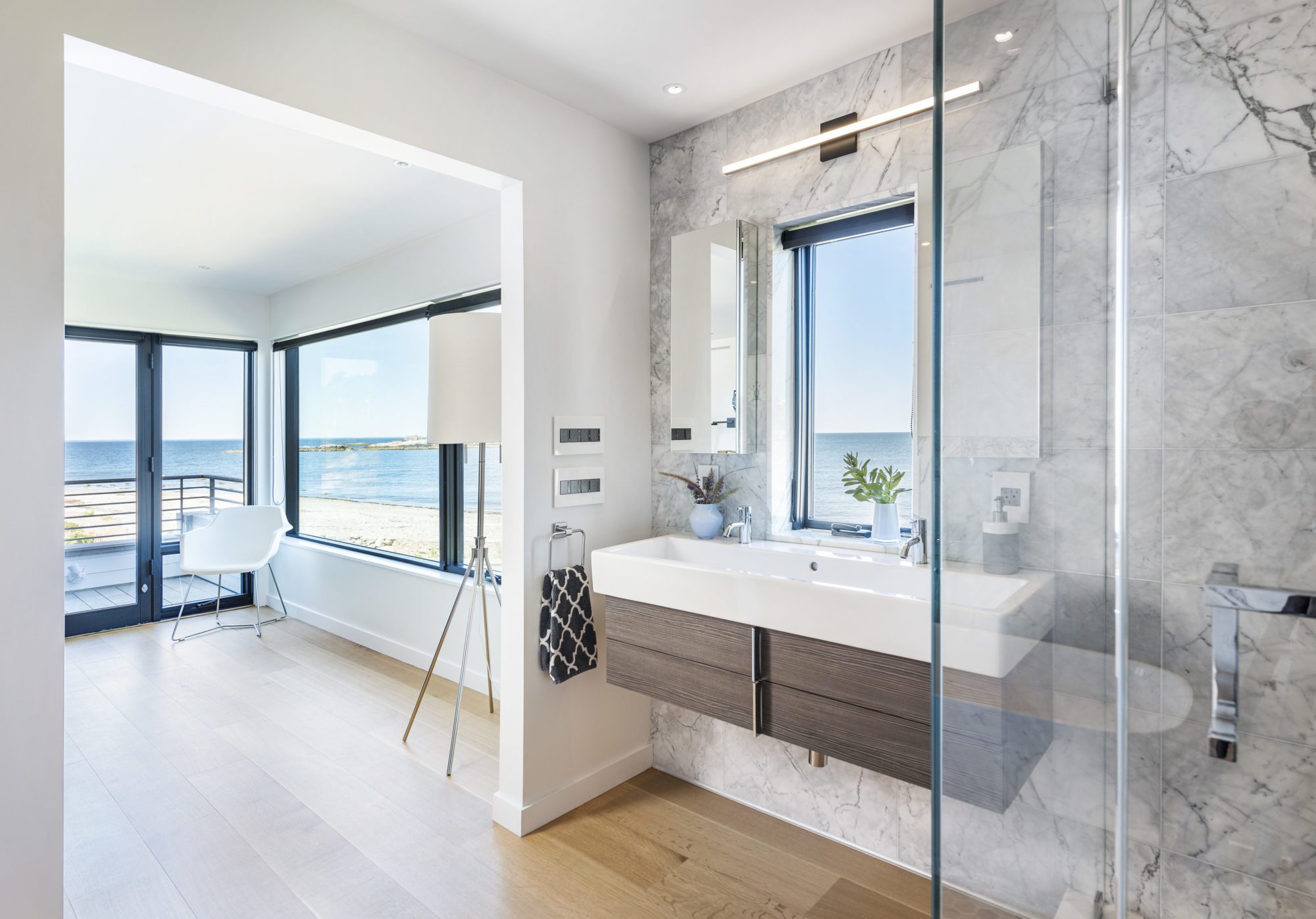
Balancing expansive modern windows while maintaining a cozy atmosphere requires attention to window sill heights and placement. Throughout the home, these vary intentionally: floor-to-ceiling in the bay window for maximum drama, eighteen inches above the floor in the living room for furniture flexibility, thirty inches in bedrooms for privacy while sleeping (lowered to eighteen inches at the guest bedroom bay window where outlook matters more). Strategic corner windows expand the perceptual scale of smaller spaces, making rooms feel larger than their actual dimensions by extending sightlines beyond the confines of the walls.
Abundant daylight serves as a primary goal, but the complexity of changing coastal light demands thoughtful window design. Light from different directions throughout the day creates shifting spatial character—morning light differs from afternoon glow, and overcast conditions transform spaces yet again. Rather than fighting this variability, the design embraces it, using window placement to capture different qualities of light in different rooms. The result connects inhabitants to the passing of time and weather patterns, grounding them in place rather than creating the sterile quality of spaces lit primarily by artificial sources.
Creating Drama Through Height Variation
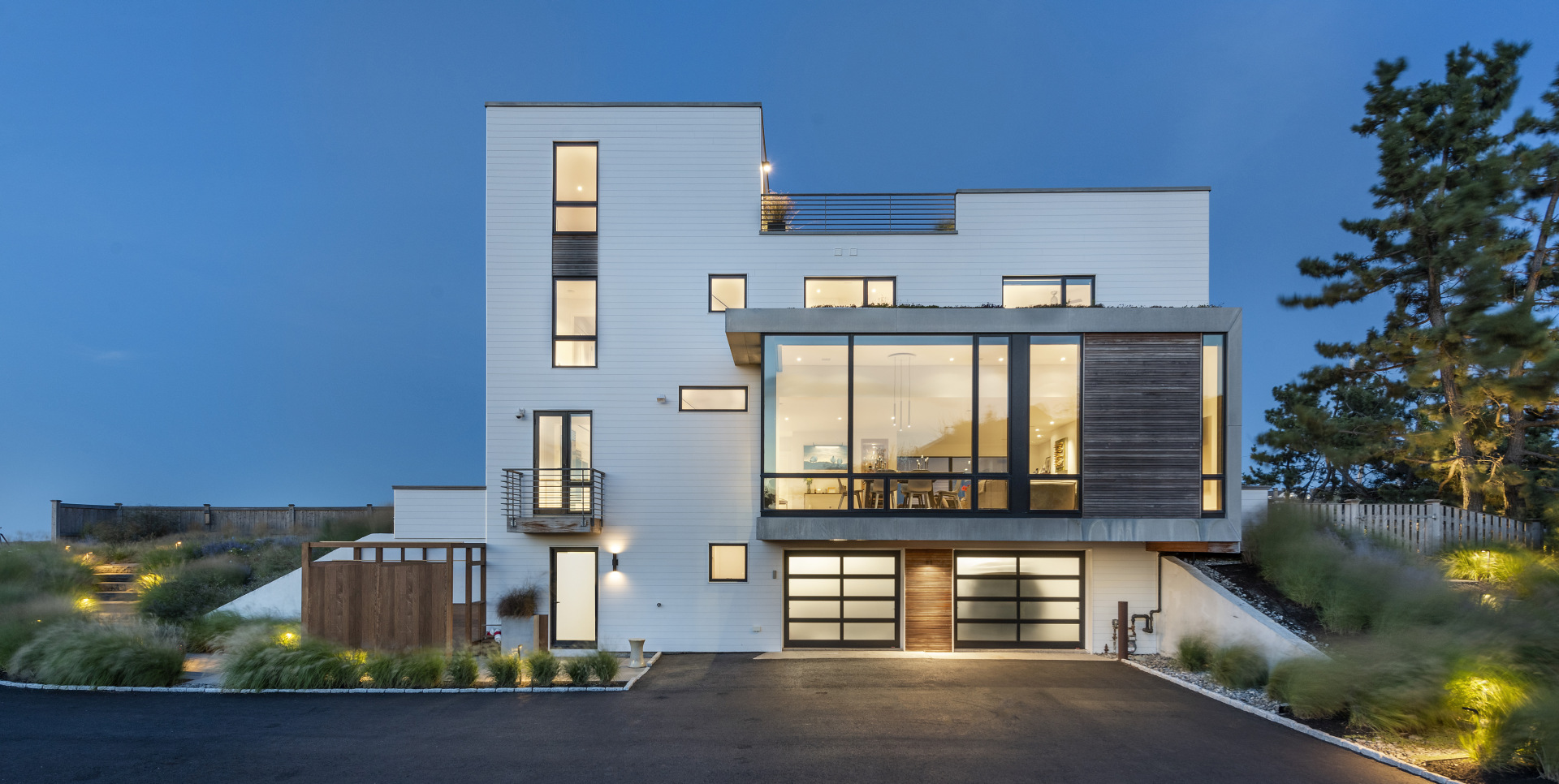
Existing ceiling height differences establish spatial hierarchy: the main living space sits slightly higher than bedrooms, signaling the difference between public and private zones. The bay window features substantially higher ceilings for dramatic effect, transforming what could have been a simple addition into a spatial event. These height variations help spaces feel larger or smaller depending on occupancy; higher ceilings accommodate crowds without feeling overwhelming when just two people occupy the space, while lower bedroom ceilings create a sense of protection and enclosure appropriate for rest.
Balancing vertical volume requires practical considerations beyond spatial drama. A green roof addition above the bay window enhances views from the guest bedroom above while providing environmental benefits and visual interest from the exterior. This layering of experiential, environmental, and aesthetic considerations characterizes the warm modern approach: multiple goals addressed through integrated design solutions rather than singular gestures. Volume becomes a tool for creating comfort and variety rather than an end in itself.
Design Elements That Soften Modernism
Warm Modern Architectural Details for Approachability
Strategic window placement expands perceived scale, making rooms feel larger than their measured dimensions. Rather than treating each wall as an isolated surface, walls designed as planar elements emphasize continuity that pulls the eye beyond individual room boundaries. Bringing in additional natural light functions as a "softening" strategy, dispersing shadows and creating visual flow between spaces. These techniques collectively prevent the bunker-like quality that can afflict contemporary homes prioritizing views in one direction while leaving other walls blank and oppressive.
Furniture and Built-Ins at Human Scale
Built-in elements respond to floor plan irregularities while serving functional needs: a DJ station integrated into the living room, a primary bedroom wardrobe that works with existing structural constraints. During the design phase, showing furniture to scale in floor plans helps ensure that spaces will feel appropriately proportioned when occupied.
Oversized sectionals would overwhelm these spaces, while too-minimal furnishings would leave them feeling empty, but the clients' furniture selection reinforces human-centered scale rather than fighting against it. Art and furniture complete what architecture begins, making spaces feel genuinely inhabited rather than staged.
Modern Lighting for Warmth and Drama
Window expansions serve a primary goal: bringing in abundant natural daylight. The complexity of coastal light, with its intensity, color shifts throughout the day, and dramatic quality during storms, required thoughtful window design that could accommodate this range. Artificial lighting supplements natural light, with small aperture recessed lights creating subtle sparkle and nighttime drama. This restrained approach to artificial lighting prevents the over-lit quality common in many modern homes, where every corner receives equal illumination regardless of use or mood.
Balancing natural and artificial light throughout different times of day creates spatial flexibility. Morning light entering from the east wakes certain spaces while leaving others in relative shadow; afternoon light transforms these relationships. Rather than imposing artificial consistency, the lighting strategy works with these natural variations, allowing spaces to change character throughout the day. This approach connects inhabitants to daily and seasonal cycles, grounding them in the specific conditions of their coastal location rather than creating generic contemporary spaces that could exist anywhere.
Living in a Flexible Modern Home
The pandemic provided an unexpected real-world test of the home's flexibility. Rather than splitting time between their beach house and Boston home, the clients remained full-time at the coast. As architect Will Ruhl notes, "Rather than spending half the week in Boston, they said they loved how the house could change to accommodate a home gym, two home office spaces, all while not feeling claustrophobic." Extended daily use proved the pliability of the design as the home successfully accommodated multiple functions simultaneously without the spaces feeling compromised or makeshift.
Spatial multi-functionality allows the home to transform for different needs: intimate moments with just the couple and their dog, work-from-home arrangements requiring separation and concentration, large gatherings that fill the house, roof deck, and yard. Each mode demands different spatial qualities, yet the same architecture supports all of them. This represents the ultimate validation of warm modern design principles: spaces that work not just photographically but across the full spectrum of how people actually inhabit their homes, from the mundane to the celebratory.
Reassuring Clients About Warm Modern Design
Most clients who approach RUHL | JAHNES specifically seek the demonstrated "warm modern" approach, having seen previous projects that embody this philosophy. Design philosophy rooted in accessibility and comfort requires less client education than approaches that prioritize formal innovation over livability. The firm's work demonstrates that modern architecture need not feel cold or intimidating, that clean contemporary aesthetics can coexist with genuine warmth and human-centered scale.
Balancing these qualities—clarity and comfort, openness and enclosure, contemporary aesthetics and timeless livability—defines the warm modern approach. It requires discipline to avoid the decorative excesses that can compromise spatial clarity, but also the confidence to incorporate natural materials and varied textures that prevent sterility. The Black Rock Beach House demonstrates these principles in action: a thoroughly modern home that feels welcoming from the moment one enters, spaces that work as well for daily life as for special occasions, architecture that enhances living rather than constraining it.