

Bold colors transform a Boston Harbor waterfront home with a modern coastal palette inspired by Key West style and 25 years of client collaboration.
— Insights
waterfront, Renovation
Framing the View: How Strategic Openings Redefine Modern Waterfront Home Design

At the start of this project by architecture firm RUHL | JAHNES, the Technicolor Dreamhouse, sat dark and disconnected from its prime Boston Harbor location. An original Colonial, its traditional window configurations failed to capture the dramatic potential of skyline and water views. A too-small bay window in the living room offered only hints of what the property could deliver, while upstairs double-hung windows limited both natural light and view access. The clients recognized this gap between existing condition and location value, selecting the house for its views rather than its architecture.
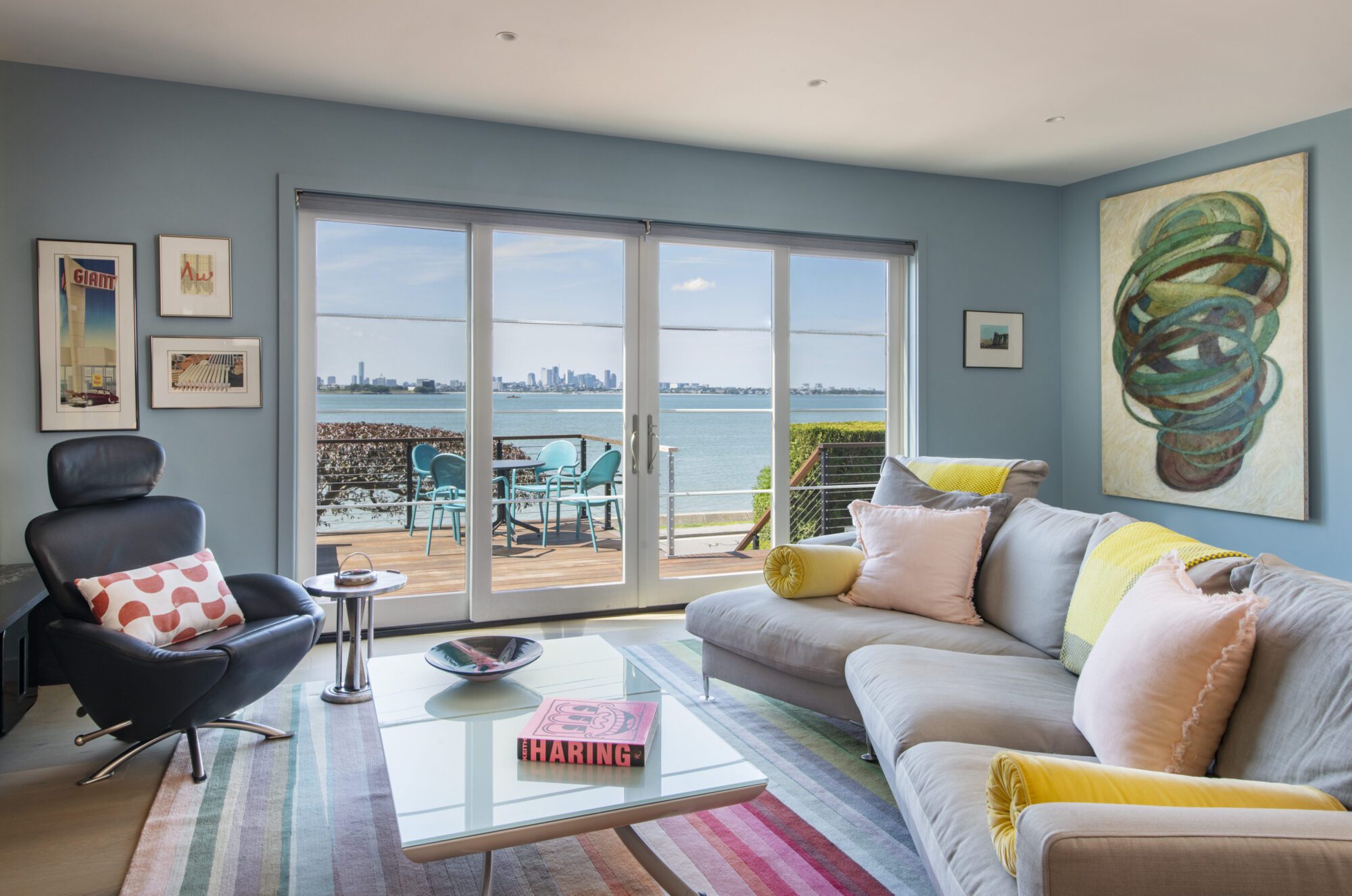
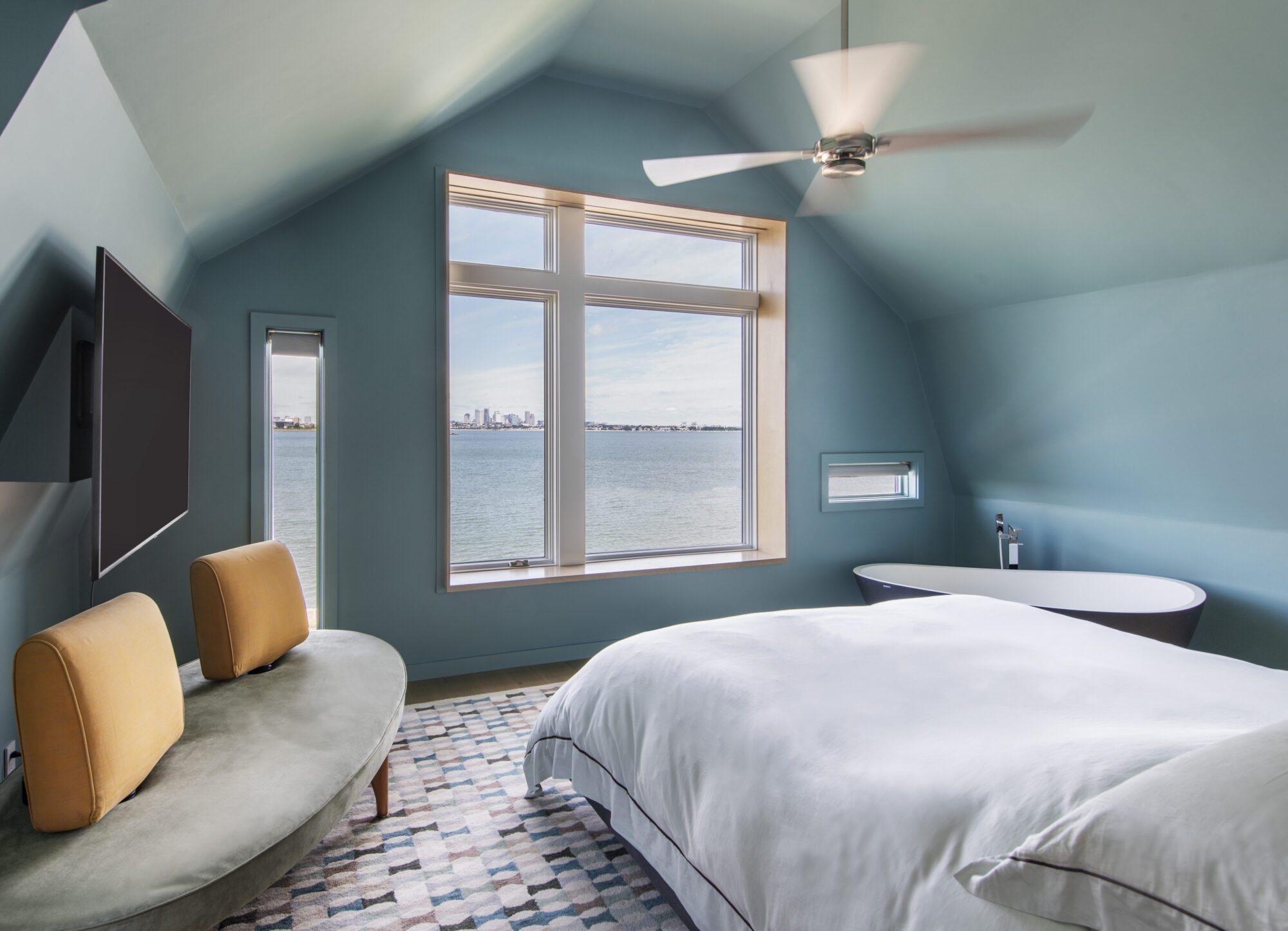
The renovation transformed this gap through two primary interventions: the addition of twelve-foot sliding glass doors on the ground floor and an eight-foot-wide bay window in the primary bedroom. These strategic openings redefined the home’s engagement with its waterfront setting, demonstrating how focused architectural moves can fundamentally alter spatial experience without wholesale reconstruction.
Structural Opportunity from Fire Damage: When Constraint Becomes Catalyst
Exploratory work revealed signs of previous fire damage to the existing structure. What could have complicated the renovation instead became a fortunate catalyst. Much of the waterfront wall required rebuilding on both levels, creating opportunity to add structural headers above the new twelve-foot sliding doors and eight-foot bay window without the restrictions of preserving original framing.
The necessary structural repairs enabled complete upgrades to weather barriers and flashing systems across the entire waterfront facade. Pre-engineered structural changes allowed ambitious design moves that might have proven cost-prohibitive in a structurally sound building. This demonstrates how constraints, when recognized early, can create permission for more comprehensive interventions that improve both performance and experience.
The Strategic Vision: Two Major Interventions
Twelve-Foot Sliding Doors and Eight-Foot Bay Window Frame Harbor Views
The waterfront facade features two primary openings scaled to capture maximum view access while maintaining structural integrity. Downstairs, twelve-foot sliding glass doors create direct connection to exterior spaces and enable seamless indoor-outdoor flow. Upstairs, the eight-foot-wide bay window in the primary bedroom offers expansive harbor and skyline perspectives. Both openings were designed as large as structurally and economically feasible.
Careful proportion studies balanced practical considerations with the goal of dramatic view access. Opening dimensions responded directly to sight lines toward Boston Harbor and the skyline beyond. The home’s elevated siting enhances water views from above while rendering street traffic invisible from interior spaces, creating the psychological effect of complete privacy despite urban proximity.
Working With a Historic Gambrel Roof
The design team considered altering the existing gambrel roof profile to accommodate wider upstairs windows. However, the decision to maintain the existing roofline controlled costs while still allowing maximum openings within that constraint. This strategic focus invested resources in view-framing interventions rather than wholesale form changes, demonstrating how targeted moves can transform experience without complete reconstruction.
The large waterfront openings helped both clients and architects see past the less-desirable gambrel form. By concentrating design energy on the elements that most directly affected daily living experience (the views and natural light), the project achieved dramatic improvement while working pragmatically within existing architectural parameters. This approach prioritized impact over comprehensive transformation.
Balancing Walls and Openings in Renovated Colonial Home
Achieving the largest possible openings required maintaining sufficient walls on all sides for structural stability. Careful proportion studies explored the limits of structural engineering, with cost considerations influencing final dimensions alongside technical requirements. The goal centered on aligning design aspirations and practical constraints.
Load distribution strategies differed between the ground-level sliding doors and second-floor bay window, each requiring specific header design to carry loads around the openings. This technical work happened invisibly behind finished surfaces, but enabled the visual drama that defines the home’s character. The engineering requirements shaped rather than compromised the design, producing openings scaled appropriately to both structure and view.
How the Openings Work Together: Complementary Perspectives on the Same Vista
Both major openings frame similar Boston Harbor and skyline views from different elevations, creating vertical visual continuity through the home. The upstairs bay window delivers a more expansive, dramatic perspective due to height, offering broader panoramic sweep. The downstairs sliding doors provide direct connection to exterior spaces, transforming the relationship between interior living areas and waterfront terraces.
This represents a cohesive facade strategy rather than disparate interventions. The two openings work in concert, allowing occupants to experience the same vista from multiple vantage points throughout their daily routines. Morning coffee in the bedroom offers one relationship to the harbor; evening gatherings on the lower level provide another. Together, they establish the waterfront location as the home’s organizing principle.
Using Sight Lines to Create Intimate Views
As architect Sandra Jahnes observes, “The openings providing views to the harbor take on different scales. One of the most special is the smallest and is located at the tub.” This intimate window creates a private harbor connection during bathing, demonstrating how view framing operates at multiple scales beyond the two major interventions. The varied opening sizes establish a hierarchy of view experiences throughout the home.
A view-through sequence extends from the office, through the stair, and out to the harbor, creating a layered spatial experience. These carefully orchestrated sight lines reveal how strategic openings function as more than isolated gestures. They work together to maintain constant visual connection to the waterfront setting, whether through grand panoramic frames or quiet, contemplative moments scaled to individual activities.
Transformative Home Interior Lighting

All-Day, All-Year Illumination
The transformation from dark and disconnected to filled with natural light all day long, all year long, represents the project’s most fundamental spatial improvement. Southern exposure provides passive winter warming in addition to views, reducing heating loads during cold months. Eastern exposure benefits the kitchen and primary bathroom with morning light, while western sun activates the living room and primary bedroom during afternoons.
Strategic opening placement fundamentally changed spatial quality beyond mere visual access. The quantity and distribution of natural light affects how spaces feel at different times of day and throughout seasons. This attention to temporal experience demonstrates how modern waterfront home design can optimize not just for views but for the changing conditions of natural illumination across the daily and annual cycles.
Waterfront Home Privacy Solutions
The house height above street level provides natural privacy screening without additional intervention. Sight line angles render street traffic invisible from interior spaces, creating the sensation of seclusion despite urban density. This site advantage was leveraged first, establishing baseline privacy before considering supplemental systems.
Roll screens were installed at all windows for nighttime privacy when illuminated interiors would otherwise be visible from outside. The placement strategy recognized that expansive views and privacy can coexist through thoughtful site analysis combined with selective screening. The screens remain retracted during daytime, preserving unobstructed harbor views while providing privacy when needed after dark.

Weatherproofing in Modern Waterfront Home Conditions
This project paired old-school building expertise with current-technology weatherproofing strategies. The flashing system was designed with triple redundancy specifically for waterfront exposure, recognizing that coastal conditions demand more robust protection than inland locations. The complete redo of weather barriers across the entire waterfront facade addressed vulnerabilities that would have persisted had the openings been modified within the existing envelope.
Critical thermal performance considerations shaped the specification of large openings in this coastal location. High-performance glazing prevents heat loss during winter while managing solar gain in summer. The substantial facade changes created opportunity for comprehensive building envelope improvements that enhanced both comfort and energy performance, demonstrating how major design interventions can enable technical upgrades throughout related building systems.
Site Considerations: A Common Sense Approach to Coastal Home Design
Staying within the existing building footprint simplified zoning and approval processes considerably. The location presented no significant historic district or local regulation barriers to substantial alterations, allowing the design team to focus energy on architectural rather than bureaucratic challenges. This common-sense approach to waterfront requirements enabled ambitious facade and interior transformations without attracting regulatory complications.
Working within the existing building envelope proved that maximum impact can be achieved through focused interventions rather than expansion. Strategic openings redefined modern waterfront living at this property by concentrating resources on the elements that most directly affected daily experience: views, light, and connection to place. The approach demonstrates how thoughtful design within constraints often produces more refined results than unlimited freedom.
Client Reaction and Living Experience
The clients responded to the proposed opening scale with enthusiasm and joy. 3D software (Rhino) helped communicate the design vision from RUHL | JAHNES and allowed clients to see past the gambrel form they found less appealing. This visualization proved essential in building confidence for the ambitious opening sizes, helping translate technical drawings into experiential understanding before construction began.
Feedback on the completed project echoes the initial reaction. The openings perform successfully throughout different seasons and times of day, validating the careful studies that shaped their scale and placement. Strategic openings transformed the living experience from disconnected to fully engaged with the waterfront location, demonstrating how modern waterfront home design can leverage views and natural light to fundamentally redefine how residents inhabit their spaces.