

A Colonial on Boston Harbor receives a modern waterfront home design transformation.
— Insights
waterfront, Renovation
A Coastal Color Palette for the Modern Era: A Key West Style House in Boston Harbor

At this Boston Harbor waterfront home, twenty-five years of collaboration between the clients and architecture firm RUHL | JAHNES manifested a vibrant collage of blue, yellow, and pink walls that challenge coastal architecture conventions. The palette for the Technicolor Dreamhouse draws inspiration from Key West style homes while pushing beyond soft pastels into electric hues, creating a modern interpretation of coastal living that feels both joyful and sophisticated.
This project demonstrates how trust built over decades enables genuine risk-taking. When architect and client share a passion for bold color and establish fluency in each other’s aesthetic language, design conversations can move beyond safety into novel territory. The result is a coastal color palette that serves the clients aesthetic while expressing an artistic sensibility rarely seen in New England residential architecture.
Color as a Throughline in Residential Home Design
The color collaboration between RUHL | JAHNES and these clients spans three distinct projects. Their first project, a loft design in 1999, featured aniline-dyed yellow kitchen cabinets. Later, a clothing store design incorporated an energizing orange wall within an otherwise industrial neutral palette. Now at this waterfront home, yellow returns as a connecting element that unifies functional areas within the main living space. Color functions here as a shared language, enabling increasingly confident explorations with each successive project.
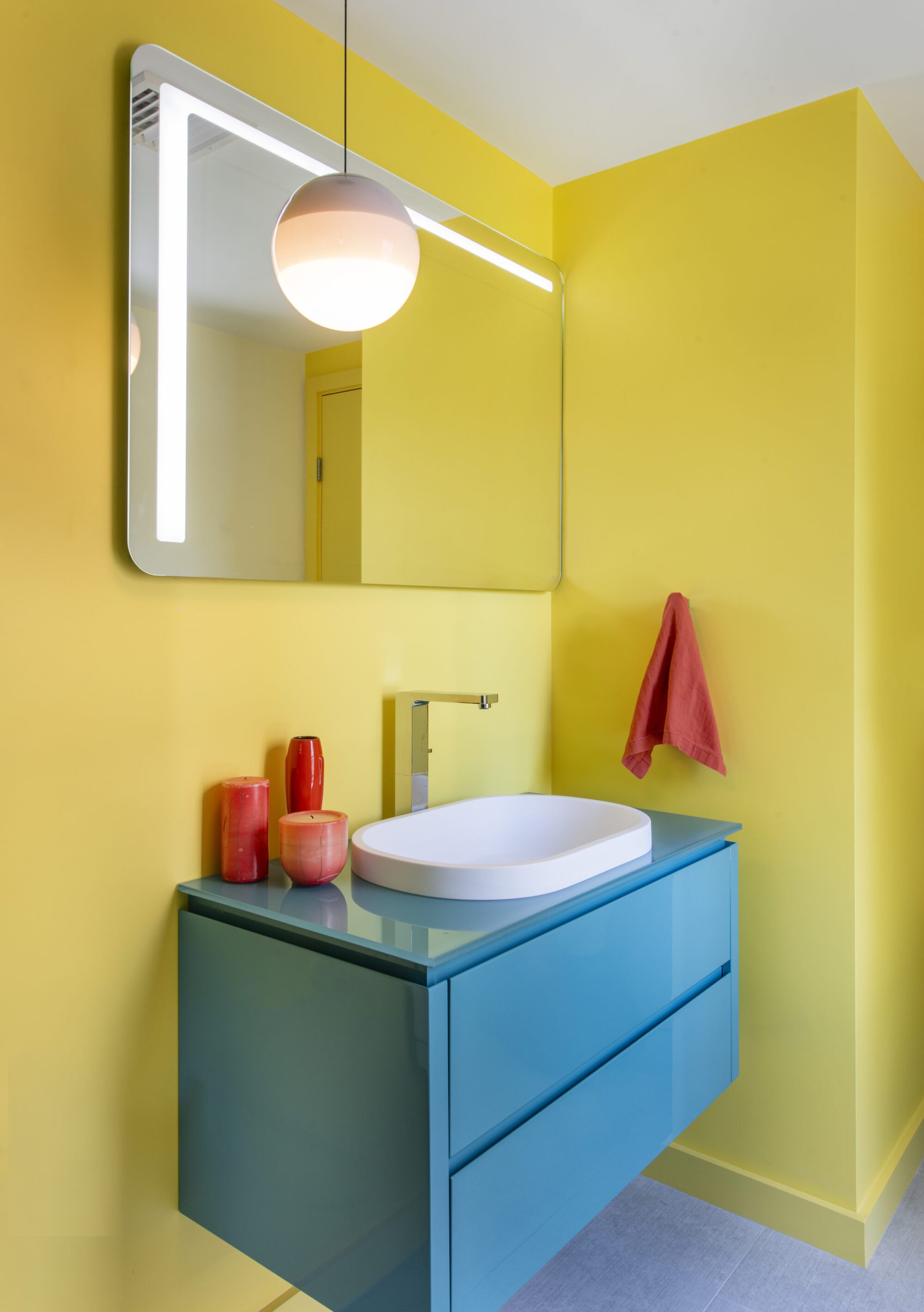
The specific palette centers on blue-gray neutrals throughout the home, with focused areas of bright yellow and selective pink accents. The Benjamin Moore paint “Hot Lips”, a vibrant magenta, appears in the guest closet and bathroom, providing concentrated chromatic energy in private spaces. Bright yellow connects functional zones within the main living areas, creating visual continuity across open plan spaces. Influenced by the Boston Harbor location, neutrals lean toward blue tones, establishing connection with the waterfront setting.
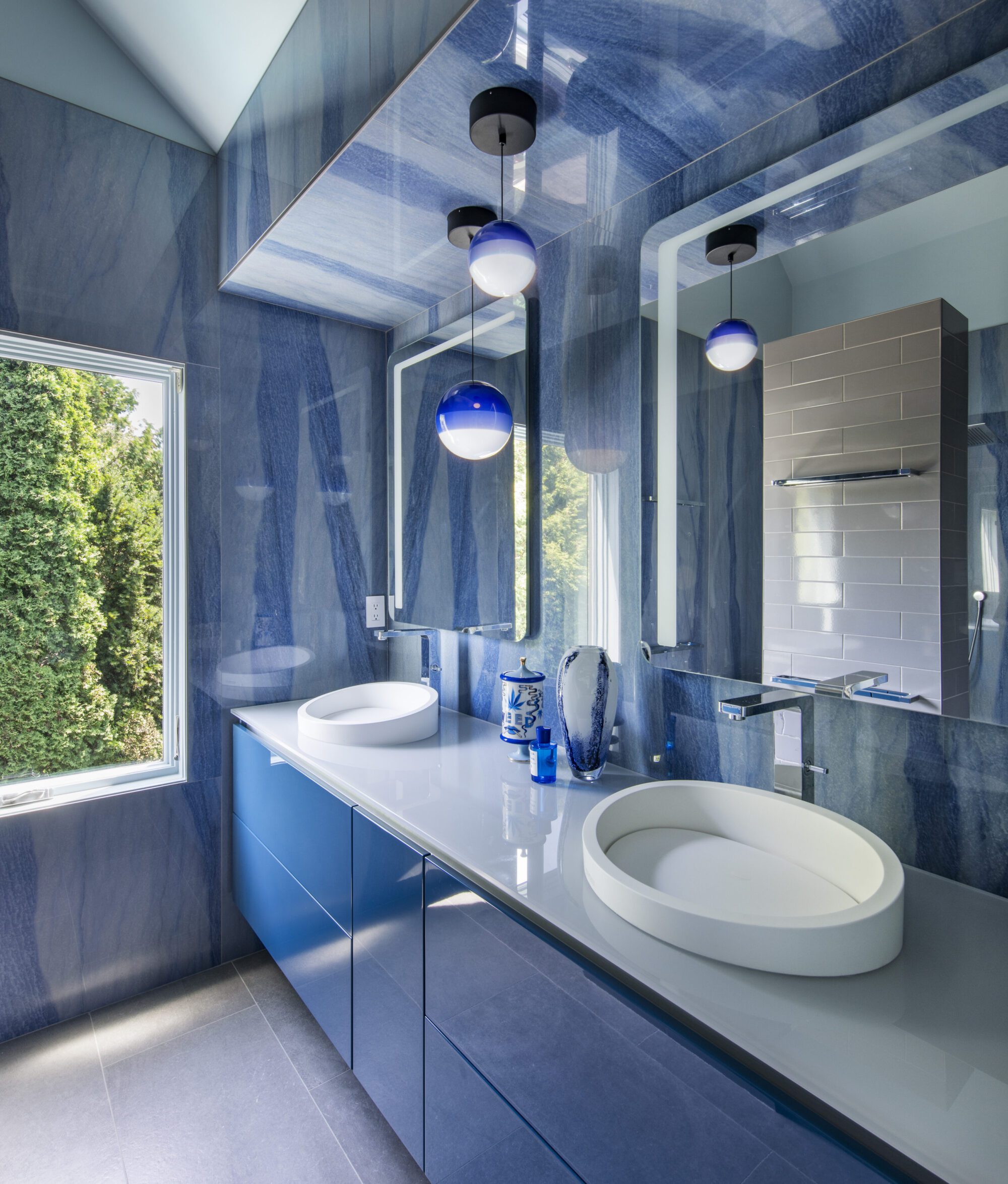
In the primary bathroom, purple-veined stone walls extend the color narrative beyond painted surfaces, demonstrating how material selections participate in the overall color strategy. The two-story space reads as a unified loft through repeated cabinetry finishes and consistent blue-gray backgrounds. This cohesion allows bold color moments to register powerfully without fragmenting the spatial experience. An intentional logic guides palette distribution: color appears where it enhances function and connection rather than applied uniformly throughout.

Key West Style Inspiration Guides Coastal Home Palette
The clients divide their year between Key West from fall through spring and this Massachusetts waterfront home during summer. This seasonal pattern directly informed both interior layout and palette. Large decks and oversized openings parallel the seamless indoor-outdoor flow they experience at their southern residence. Rather than attempt to imitate Key West style, the design goal centered on creating fun, interpreting tropical living through a contemporary lens specific to this northern location.
From Pastel Tropes to Electric Expression
The palette serves as a bright summer complement to their winter home’s softer colors. Where traditional Key West style houses employ pastels, this project deliberately challenges those typological expectations through bright, electric colors that feel more energized than traditional tropical palettes. This departure from coastal conventions creates something simultaneously referential and novel. The bold color choices reflect how tropical influences can inform contemporary design without requiring literal translation, demonstrating that regional inspiration works most successfully when adapted to specific client needs and site conditions.
The confidence required to deploy such bold colors stems from the clients’ clear vision and the architects’ willingness to support unconventional choices. The result represents a coastal color palette for the modern era: location-specific, client-driven, and architecturally integrated rather than applied as superficial decoration. By challenging regional and typological expectations, the project expands possibilities for how contemporary waterfront design can engage color.
Cabinetry and Finishes as Unifying Elements
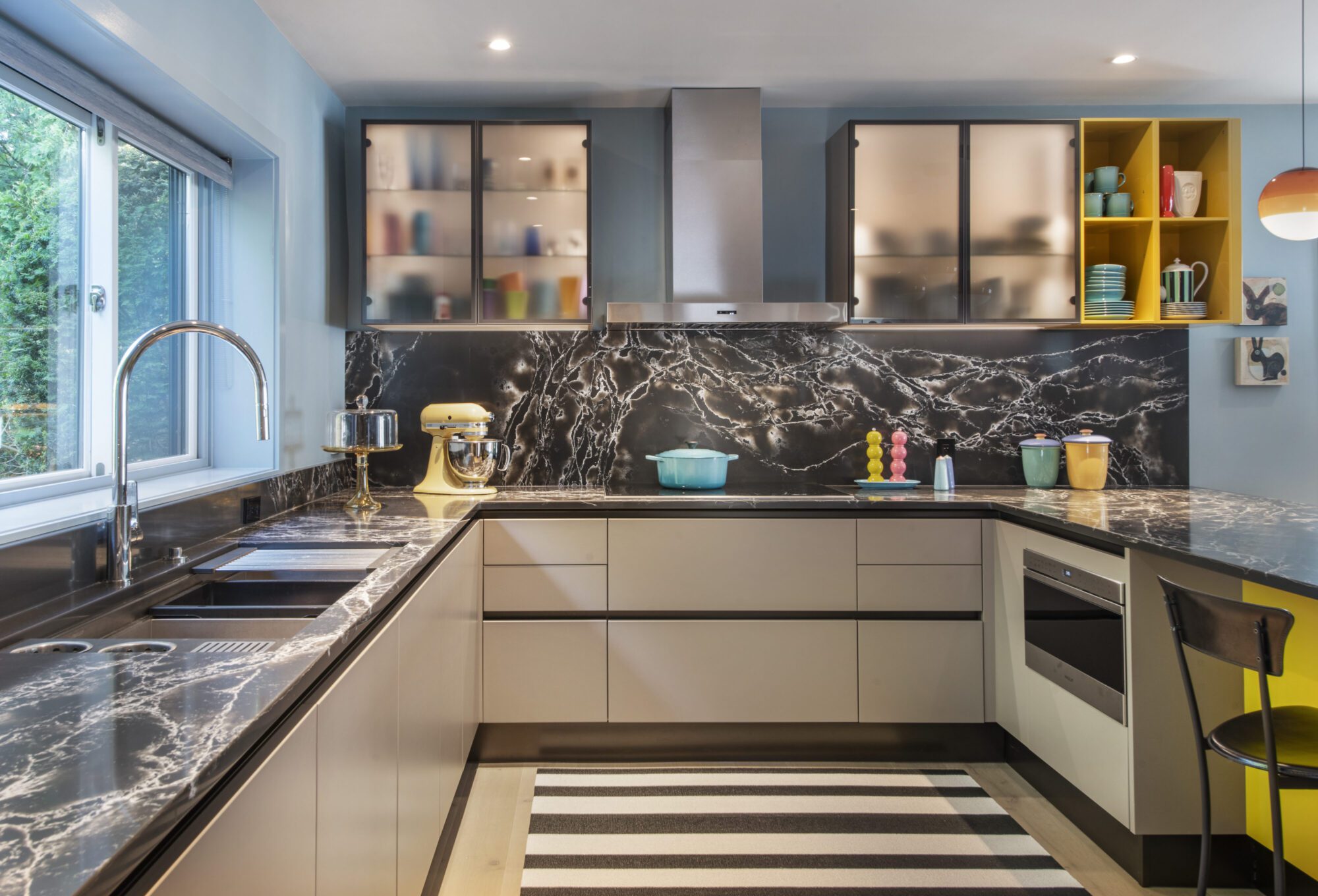
Repeated cabinetry finishes across both floors create visual continuity that holds the composition together within bold color moments. Soft gray backgrounds with blue tints function as connective tissue, preventing the palette from fragmenting into unrelated incidents. This cohesive material strategy proves essential: without unified finishes and background colors, bold hues would create visual chaos rather than joyful energy.
Strategic color placement concentrates bright tones where they connect functional zones rather than distributing them uniformly. Purple-veined stone in the primary bathroom extends the color narrative into material selections, demonstrating how the palette operates beyond painted surfaces. This attention to material cohesion allows bold color to feel integrated rather than applied, producing spaces that read as compositionally intentional rather than arbitrarily decorated.
How Natural Light Transforms Color in Interior Design
The new large openings, including twelve-foot sliding doors and oversized bay windows, flood interior spaces with natural light that dramatically affects color perception. Photography of the home reveals how colors appear bluer and brighter than they register in person, testimony to how lighting conditions transform chromatic experience. This variability performs throughout the day as changing sun angles activate colors differently at morning, midday, and evening.
The palette reaches peak intensity at sunset when low western light floods every space simultaneously. All colors activate during these golden hours: yellows glow, blues shift toward violet, and even neutral grays take on warmth. The generous glazing influenced color selection from the outset. The palette needed to perform across diverse lighting conditions, appearing neither washed out in bright midday sun nor too intense in evening light. This dynamic color experience functions as an intentional design feature rather than accident.
The Psychology of Joyful Color
RUHL | JAHNES consistently pursues warm, modern spaces that prioritize joy and fun, but this project occupies the most energetic edge of that spectrum within their portfolio. For entertaining, the bold colors create an immediately festive, welcoming atmosphere that supports the clients’ love of hosting. The palette amplifies social energy, making gatherings feel more celebratory.
Yet the same colors that energize parties allow relaxation when only two people occupy the space. This adaptability stems from distributed, discrete color placement rather than overwhelming saturation. People activate the palette: more occupants generate more visual energy, while fewer inhabitants experience greater tranquility. This psychological flexibility demonstrates how successful bold color requires attention to both chromatic intensity and strategic distribution.
Balancing Energy with Visual Rest
A Painting's Logic Applied to Architecture
Decisions about where to concentrate color versus where to exercise restraint emerged from intuition informed by experience. Architect Will Ruhl notes, “It’s like a painting, with very focused areas of color energy, and enough neutral colors and materials that help bring overall balance.” This compositional approach prevents overwhelming intensity by surrounding chromatic moments with visual rest. Without neutral backgrounds and materials, the eye has no place to recover between intense chromatic experiences. Visual rest areas allow bold colors to register more powerfully by providing contrast.
Strategic restraint proves as important as chromatic boldness in creating spaces that feel energizing rather than exhausting. This balance between energy and calm creates dynamic yet livable spaces that sustain long-term occupation.
An Artist's Approach to Residential Design
Will Ruhl’s art school background as a college art major informs his confidence with bold color choices. The joy of this collaboration lay in the intersection between architectural expertise and artistic sensibility, with the clients’ vision guiding decisions. This collage was designed specifically for these individuals rather than serving as a prototype for broader application. The palette reflects their seasonal lifestyle, entertaining habits, and aesthetic preferences in ways that might prove excessive for others.
The project demonstrates how artistic principles translate to architectural practice when client relationships allow genuine creative partnership. For Ruhl, the work satisfied both professional and artistic impulses while remaining grounded in functional requirements and site conditions. This integration of art and architecture produces work that operates simultaneously as living space and chromatic composition.
Bold Color Palette Reception and Influence
The project has been published and received enthusiastic response from the design community, particularly from those who recognize it as client-specific rather than universally prescriptive. The architects acknowledge that this palette might be “too much” for many clients, and that intentionality matters. As Ruhl observes, “That is one of the joys of designing houses: finding the perfect palette for each unique client.” The work exemplifies care for individual needs rather than proposing standardized solutions.
The bold color choices at play in the Technicolor Dreamhouse reflect both the specific waterfront location and the clients’ lifestyle of seasonal living and frequent entertaining. This specificity prevents the project from serving as a template while demonstrating possibilities for what contemporary coastal architecture can achieve when clients and architects share confidence in aesthetic risk-taking. The result expands the vocabulary for how Key West style house inspirations can inform northern residential design without requiring literal transposition.