

How RUHL | JAHNES modernized a home in Brookline, MA, proving that preservation is a sustainable approach to historic Victorian home renovation.
— Insights
houses
Artist’s Studio Renovation from Darkroom to Creative Workspace

Reimagining a Forgotten Room
The evolution from analog to digital photography sparked an opportunity for RUHL | JAHNES to completely reimagine an underutilized space within this historic Victorian home in Brookline, MA. What was once a photographer's darkroom needed to become something entirely different: a bright, inspiring digital studio that could serve as both a creative workspace and professional gallery.
The transformation of the Aspinwall Hill House represents more than just a home renovation; it exemplifies how adaptive reuse can breathe new life into historic homes. The challenge lay in honoring the home's Victorian character while creating a thoroughly contemporary workspace that meets the demands of modern creative practice, balancing historic preservation with contemporary functionality.
From Analog to Digital: A Space Reborn

A Personal Evolution
The studio's transformation mirrors its artist's creative journey from traditional darkroom photography to contemporary digital practice. Where the space once required separation from the outside world and the patchwork of daylight filtering through the trees, the new studio celebrates natural illumination and visual connection to the surrounding New England landscape.
This darkroom renovation demanded a complete architectural rethinking. The Boston-based design team approached the renovation as both a functional upgrade and a philosophical reimagining, moving from a space of creative constraint to one of creative possibility, replacing light-blocking features with expansive windows and establishing visual connections that inspire.
Designing for a Creative Workflow
Magnetic Walls and Flexible Display
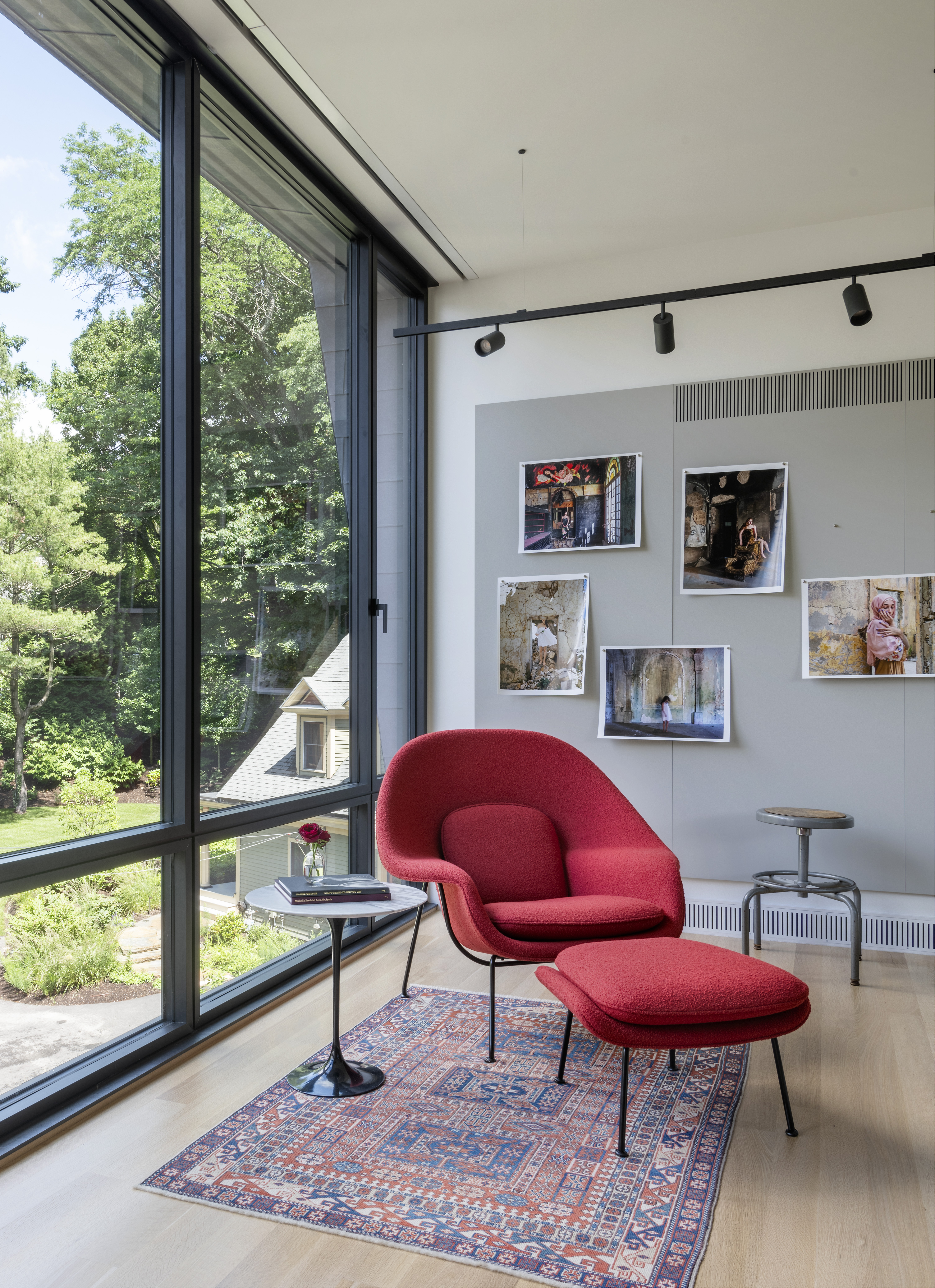
The Brookline studio's most distinctive feature combines function with architectural sophistication: custom metal wall panels that serve as magnetic surfaces for displaying works in progress. Rather than traditional pin boards or temporary display systems, these integrated magnetic walls maintain the studio's clean aesthetic while providing essential functionality. This innovative solution allows the space to function simultaneously as a polished architectural environment and a dynamic creative workspace.
Creative workspace features in this design include:
- Custom metal wall panels for magnetic display and organization
- Flexible surfaces that accommodate changing project needs
- Integration of functional elements within refined architectural finishes
- Solutions that support both creative process and professional presentation
The design demonstrates how custom solutions can address specific creative needs without compromising architectural vision.
Natural Light, Views, and Placement
Strategic positioning maximizes both natural light and creative comfort. A large dormer window captures western light throughout the day, while the primary workstation faces east to minimize glare during intensive work sessions. This careful orientation demonstrates how thoughtful planning can optimize both inspiration and productivity.
The studio occupies the home's most secluded location, providing the concentration essential for creative work while maintaining connection to the main house through a renovated back staircase. Enhanced with natural light and upgraded finishes, this circulation space becomes part of the studio experience rather than merely functional transition, optimizing natural light through strategic window placement and careful workstation orientation.

A Studio in the Trees
Elevated above the backyard landscape, the studio offers inspiring views while maintaining the privacy essential for focused creative work. The sensation of working “among the trees" creates an almost treehouse-like experience, with carefully planned landscape screening providing visual separation without complete isolation.
This elevated perspective transforms the creative experience, offering inspiration through indoor-outdoor connection to the natural environment while supporting concentration with thoughtful design. The collaboration between the RUHL | JAHNES architectural and landscape design teams ensures that views inspire rather than distract through elevated positioning and strategic landscape screening that provides privacy without isolation.
Expanding Beyond the House: Carriage House Conversion
The project extended beyond the main house to include transformation of the backyard carriage house into a professional client-facing gallery and a print production facility. This adaptive reuse creates dedicated space for showcasing commissioned work while handling the practical demands of shipping and production.
This New England carriage house renovation demonstrates how outbuildings can be integrated into comprehensive residential creative practice. By separating client-facing activities from private creative work, the design supports both professional presentation and personal creative process within a unified architectural vision that includes professional gallery space, dedicated production facilities, and assistant workspace.

Key Client Requests and Architectural Responses
The design process centered on creating light-filled spaces that inspire creativity while integrating professional-level facilities seamlessly within the family home environment. Each architectural decision responded to specific creative workflow requirements while honoring the home's Victorian heritage.
This careful balance between preservation and innovation demonstrates how historic homes can evolve to support contemporary life and work. The result serves both family living and professional creative practice without compromising either function through light-filled studio spaces and professional facilities thoughtfully integrated within residential architecture.
Creativity Anchored in Light and Connection
The completed studio transformation illustrates how thoughtful renovation can honor architectural heritage while enabling contemporary creative practice. From darkroom to digital hub, the studio’s evolution reflects both technological advancement and design innovation within the framework of historic preservation.
The project demonstrates that adaptive reuse need not compromise on either historic character or modern functionality. Instead, careful design can create spaces that celebrate both past and present, supporting creative work while maintaining connection to architectural legacy. This renovation showcases how Victorian homes can successfully adapt to serve 21st-century creative practice through thoughtful preservation balanced with contemporary innovation.